From fine dining to street food: how Alba built Alba Street
Metafoodies Group · · 5 min read
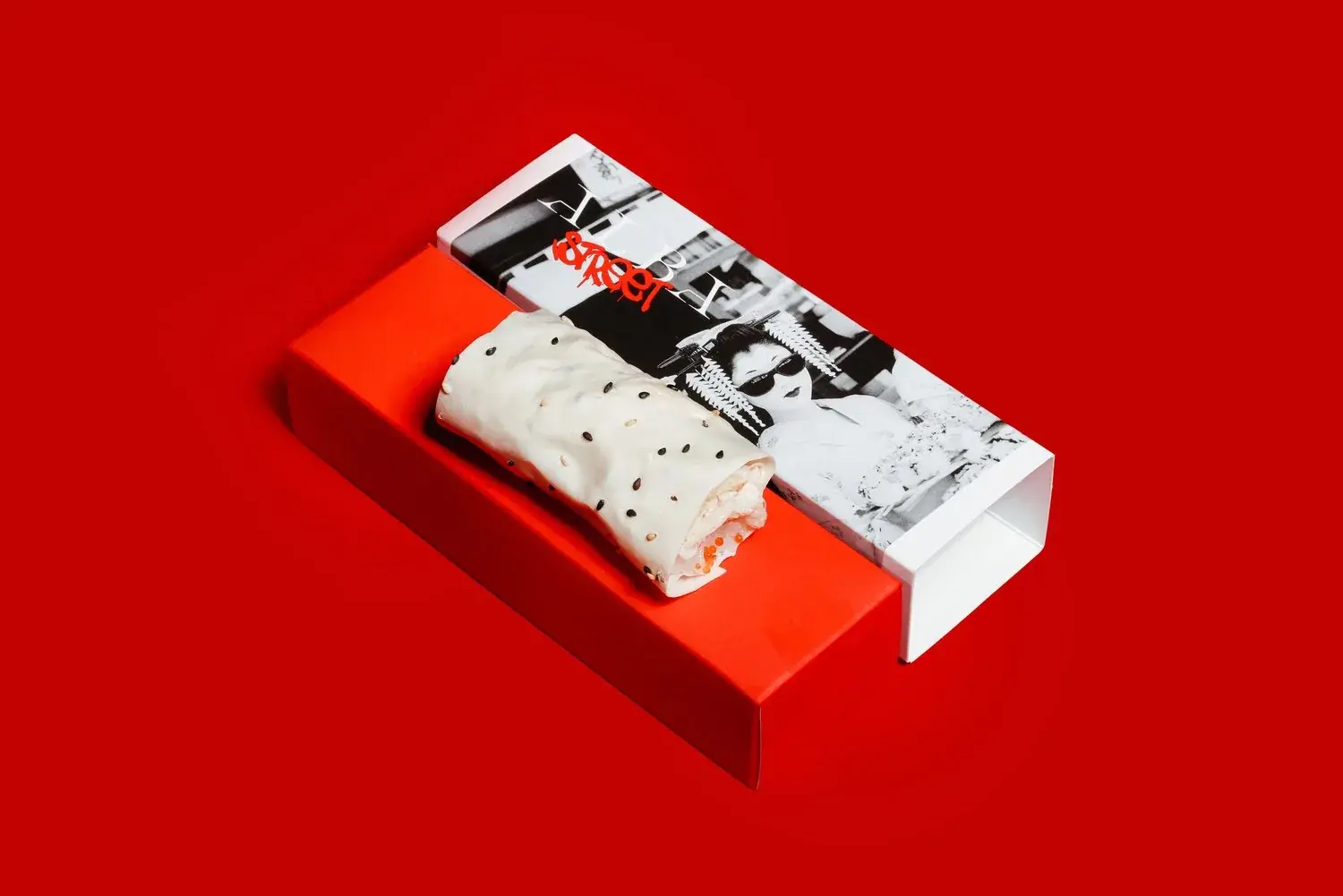
Most restaurant spin-offs go the other way. A casual concept does well, and someone decides to build a fine-dining version of it. Alba Street went the opposite direction, and the reason is straightforward: the street food items on the Alba menu kept outselling everything around them.
It started as a menu section
Alba is a contemporary Japanese restaurant in Downtown Dubai — the kind with a fish programme, a sake list and a kitchen that grades its own beef supply. Tucked into that menu was a short run of dishes that were not really restaurant dishes: a wagyu burger, a handroll, a sando. They were there because the kitchen liked making them.
They sold disproportionately. Not to a different kind of guest, but to the same guests at a different time of day — lunch, a quick dinner before something else, the meal you eat when you do not want an occasion. The demand was not for a cheaper Alba. It was for a faster one.
What had to change
Almost everything except the food. A fine-dining kitchen is optimised for a table that is staying two hours. A counter is optimised for someone who has already decided to eat and wants it now. Three things had to be rebuilt.
Throughput
Every dish was re-specified so that the skill sits in the prep rather than the pass. The kimchi is fermented in house on a schedule. The fish is cut to order but portioned in advance. Nothing on the menu requires a decision to be made at the moment of service.
Travel
A delivery bag is a hostile environment: hot, humid and moving. Anything that goes soggy in twenty minutes is not a street food dish, however good it is on the pass. The menu was rebuilt around items that survive the journey — which is also, usefully, what makes them survive a walk across a food hall.
Format, not price
The temptation with a spin-off is to cut the ingredients to hit a price. Alba Street did not. The wagyu is the same A5 supply. The fish is the same. What changed is portion and service model: no dining room, no table service, no reservations, no front-of-house. The saving comes out of the format, not the plate.
Why a food hall
Social Distrikt at Dubai Mall – Fountain Views is a 22-vendor hall with shared seating and its own ordering system. For a counter concept it is close to ideal: the footfall is already there, the seating is not your overhead, and the guest has already decided to eat before they see you. The only thing you have to win is the choice between counters.
That is a good problem for a kitchen with a fine-dining pedigree, because it is the one competition where the food is actually the variable.
What it proved
The thing Alba Street demonstrated is that a fine-dining kitchen can operate a street food footprint without diluting the brand above it — and that guests can tell. It works in a hall in Dubai. The format was built to work in a hall anywhere.
A5 Wagyu. No reservation required.
Alba Street is open daily from 11:00 — until midnight Sunday to Thursday, until 01:00 on Friday and Saturday — at Social Distrikt, Dubai Mall – Fountain Views.